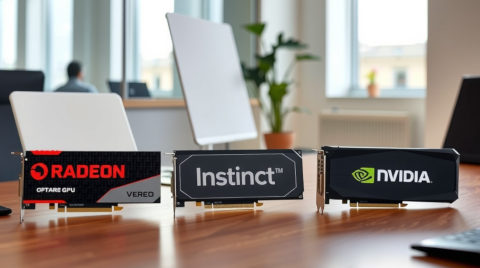


Can Your 16 GB GPU Run a Coding Harness? Local LLMs in 2026
Local 27B and 30B models are now genuinely useful for surgical coding on a 16 GB GPU -- and still so much slower and costlier per token that I rarely boot them.
Read the post →Local 27B and 30B models are now genuinely useful for surgical coding on a 16 GB GPU -- and still so much slower and costlier per token that I rarely boot them.
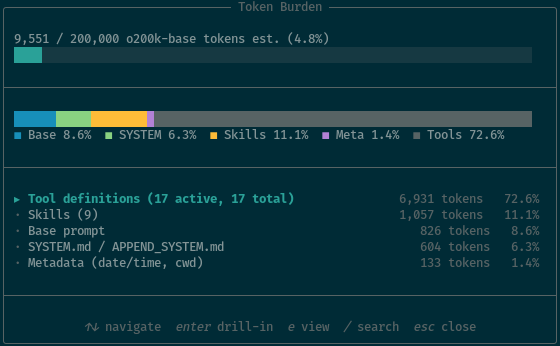
Read the post →Pi starts at 1,500 tokens of context where my OpenCode setup needs 13,800. A week of extensions later I had every OpenCode feature -- and I dropped OpenCode for Pi.
Read the post →$10 of OpenCode Go buys $60 of tokens at Zen prices. Twelve days of using nothing else burned 22% of the month -- and the models and limits are the best I have tried.
Read the post →A month of GPT-5.4 through Codex and OpenCode: faster and smarter than every budget plan I run, but not three to seven times better when you are a light user.
Read the post →Chutes, NanoGPT, and Z.ai all switched to token-based quotas. That is good news: match the model to the task, trim your context, and a cheap plan goes much further.
Read the post →Three budget coding plans, one light user: what $3 and $20 a month actually buy at Chutes, Z.ai, and Synthetic, and why the quota math is less obvious than the price tags.
Read the post →A $56 used RX 580 runs vision, speech-to-text, and text-to-speech models fast enough for a Home Assistant voice assistant, with VRAM left over for a third model.
Read the post →Stacking $3 coding plans, free API tiers, and OpenCode's multi-model tricks to get far more coding help than I pay for -- while every vendor tries to lock the doors.
Read the post →ByteShape's aggressive 30B quant finally squeezes a usable coding model onto a $600 16 GB GPU -- fast, surprisingly capable, and still no match for a $6 cloud plan.
Read the post →I am not sure this is going to be as direct of a comparison as the title implies. I am not a scientist. I don’t plan to concoct an experiment to test both tools and models against the same task....
Read the post →I’m not going to make you wait until the end to learn the answer. I’m going to tell you what I think right in the first paragraph. I believe you should subscribe to the Z.ai Coding Lite plan even if...
Read the post →My feelings about local large-language models (LLMs) waffle back and forth every few months. New smaller models come out that perform reasonably well, in both speed and output quality, on inexpensive hardware. Then new massive LLMs arrive two months later...
Read the post →The title of this blog is bordering on nonsense. You need at least a few qualifiers to determine if one thing is better than another. If you can’t let your information leak outside of your organization, then using a large...
Read the post →The simple answer is no. The Intel N100 is slow and only has single-channel RAM. You’re not going to get any work done chatting at a reasonably sized and capable LLM on your Celeron N100 mini PC.
Read the post →I am quite grumpy about both cloud AI and local AI. I just can’t figure out where I want to land, and I don’t even want to choose just one or the other. I am happy to use the cloud...
Read the post →I am not some sort of machine-learning enthusiast. I am not trying to shoehorn large language models into every problem I encounter. I am just a dude who writes a blog post every week or so, and I have been...
Read the post →I don’t know for certain that I have enough to say here to justify writing an entire blog post, but let’s see what happens!
Read the post →First of all, I don’t trust Microsoft to do a good job keeping our data safe. My recollection of history makes me feel that Microsoft’s execution regarding security often starts off poor, and there would potential for horribly incriminating or...
Read the post →It is probably obvious that I asked ChatGPT to assist me in writing the title for this blog. I am not terribly pleased with it. This title is about half way in between what I originally wanted and what ChatGPT...
Read the post →